A lot of the times, we buy things based on reviews. That includes not only guitars, but also cars, kitchenware, clothings, shoes, etc. Reviews are a helpful way to get an idea of how popular a product is, which most of the time means that thing is good enough for most people. Note: most. A product might work well for a great portion of the consumer, but that doesn't mean that you need it. That doesn't mean it'll work equally well for your application. I run into a lot of customers like this, buying loads of gear and then realise in only a matter of months that they don't need these things at all, or they're not suitable for their applications. This entry serves as both a reminder and a guide to all potential buyers out there, to think it through the right way, before you pull the trigger on any gear.
First off, what makes you not satisfied with your current rig? Many many times, people tell me they need a certain piece of gear, whether it be a Tube Screamer, a Boss distortion pedal, a new set of pickup, or even a new amp. I would almost always reply, "Well, what's making you not satisfied with your current sound?" Most customers can't name a proper or plausible reason for that possible purchase. If you can't put a finger on what you don't like about your tone/rig, you need to tuck that cash back into your wallet, go back home. And I'm not even joking! Sit in front of the rig, twiddle around with your settings, twist a few knobs. Answer yourself honestly, do you really need that piece of gear? Or was it that glowing review you read/heard/watched earlier made you want to own that piece of gear?
Lets move on to the main issue that I have put forward. Troubleshooting. Or in other words, what is the problem that you wish to rectify (no Mesa/Boogie pun intended) in your sound? Is the bass too flubby? Is the treble too piercing? Is the sound too dry? Not enough gain in the drive channel? The are many factors that can cause your tone to be unpleasant, or at least not appealing to your ears. Pigeonholing the problems is a common mistake that many people have done, myself included. Thinking that a problem can be solved by a pedal or two, we've all been there. Changing pickups because they don't sound "heavy" enough, hmmm.... Starting from the wrong spots will dig ourselves deeper into frustration and confusion.
List out everything about your tone that you're not happy with. Go into deep details of what's bugging you. Then only, the problems can be identified and the ideal solutions found, by looking at the big picture. A great starting point would be to reduce signal length to only guitar-to-amp. When you go guitar-shopping, this is how you try your guitars, straight into the amp. That's how a guitar or amp sound can be heard and judged. If the guitar and the amp don't compliment each other well, they're not going to cut it. If the pickup doesn't pair well with the guitar, they're not going to cut it. If the pickup doesn't work for your applications, for instance, having a set of vintage single coils in a Strat, but your band plays 80's rock, they're not going to cut it. If the amp doesn't work well for your applications, for example, having a JCM800 onboard, but your band plays funk, that won't go well either.
Only when the tone foundations are rightfully matched, great tone is achieved. Once the pairing is sorted, you are now happy with Phase 1 of your rig. You can then decide, whether or not to add Phase 2, which means pedals, into the equation.
Pedals are useful tools for working musicians and hobbyists alike. But if the pedal is not serving it's purpose on the board, why is it there? A lot of the times, people have some amazing tube amplifiers, and they kick back the gain, use a pedal to bring it back up. Quoting Joe Bonamassa's words, that's like using these tube amps as power amps only. As cliched as it sounds, a tube amp only sounds great when cranked. If you can help it, get an amp with channel-switching that can be operated with a footswitch. If you're playing through single-channel amplifiers, play with the volume knob for cleans.
Or, get a 2nd amp that works well for cleans and use an ABY pedal to switch between or use both.
If all the above are not options that you can consider, whether it be portability or financial issues, get an amp that works great for clean tones. That's your soundbed. Get a preamp pedal like those made by AMT, Tech21, etc. and kick 'em in when you need your dirt. They'll still sound sufficiently great. Unless you're going for a fuzz pedal, I personally don't recommend any distortion pedals not voiced to be like an amp sound. Amp-type distortions retain that organic amp sound, whereas a pedal distortion would have a distinct "pedal" sound, that might or might not be pleasant. Some are tolerable to me, like the Marshall Shredmaster, the new Jackhammer, Pro Co Rat, Suhr Riot, since they're all still based on the distortion of some amps. But just my personal opinion, I'll never catch myself buying a Boss DS-1, MT-2, Digitech Grunge, Metal Muff, that kind of distortion pedal. They just have a distinct "pedal" edge to them that I don't like.
If your amp has an amazing overdriven sound, get a transparent-sounding boost/overdrive pedal instead. Things like BB Preamps or OCDs will shine in rigs like this. set your amp gain to slight breakup, so that you can control your gain by just controlling your strumming technique. Pick light to clean up, pick hard to saturate. Unless your band plays funk, you can use that for your clean sound, and then kick in the boost/overdrive for your dirty sound. This way you'll have a wide tonal palette to play with, with all shades of gain in between easily accessed just by hitting the strings harder or lighter. A very dynamic, toneful sound is the pinnacle of guitar-playing. If you're not into that kind of stuff, clearly you are no tone snob. Not saying that's a bad thing though, but of course, having a responsive tone is way better than a flat, inert tone.
My own setup/tone has always come from the simplest, no-frills rig that involves only one or no pedal at all. Not because pedals sound bad to me, but because amps sound great to me, especially when you're letting them do all their job. That is my ideal rig to me. Some people might need pedals, but hey, if it's necessary, in that the existence/absence of the pedal may make or break your rig, try before you buy. Try to nail or get close to "that" sound without that pedal first, then only make the purchase. Not purchasing doesn't mean you're saving money. It means you've made the right choices for your rig, and there is no need to add anything more to it at the moment. It's perfect for the time being. If you did buy a pedal and it has improved your tone, you've made the right choices for your rig by adding an essential ingredient to complete your rig. Simple, huh?
That's all for this post, folks!
Friday, 24 June 2016

Wednesday, 20 April 2016
REVIEW: PRS SE Custom 24
People might have gotten bored from hearing another good thing about PRS guitars. And it's sad but true. There is barely anything wrong with any PRS guitar, barring personal preferences. And this review is the same. Except I've owned and been using this guitar since the start of 2012. So I believe I'm a legitimate user to give a review and can chime in on the playability, reliability, long term issuesm etc. So here goes!
The guitar is a PRS SE Custom 24 from 2009. Let's make out the differences between the old pre-2012 SE Custom 24 and the newer post-2012 SE Custom 24.
1. Body. My '09 has a flat top, while the new post-2012 ones have bevelled tops. The body is made from the same mahogany + maple top combo. However, the proportions are different. While the thickness is almost the same on both, the '09 had an approximately 7mm thick maple top while the new one has a considerably thicker one, as one can judge from the bevel and the natural edge binding. It's almost twice the thickness of the old SE's maple top, which may result in a different tone.
2. Controls. My '09 has a master volume, master tone and a 3-way toggle switch. The post-2012 model has a 3-way blade switch and coil split on the tone control. It's a change made in conjunction with PRS's USA line, which has also swapped out the 3-way toggle switch in favour of a 5-way blade switch, which gives the same config as the 5-way rotary switch circuit from the '90's PRSes.
3. Inlays. All standard spec PRS guitars now come with the bird inlays, including the SE line, excluding some signature models. My '09 had the moon inlays, which looked pretty cool, but what I wanted back then was the birds. They did grow on mr eventually. The moon inlays were actually quite unique, as no one else did that, and most guitars had only the regular dots. I applaud PRS for taking this approach instead of rolling with the regular dots on all their SEs. Obviously, it made no difference tone-wise, but it was worth a mention as most people think of them as deal breakers.
Here's the lowdown on the basics...
The weight was medium-light. Slightly heavier than the SE Singlecut I had tried while deciding between these two. The Wide Thin neck profile is possibly the best profile I've ever had in my hands. Either that or the Wide Fat profile. These necks are fine, real fine. The size is just nice, with a perfect blend of thickness and shredability. Rhythm playing doesn't feel tiring, and lead playing is like surfing on the frets. The 43mm nut width is great for most playing style. The lower frets don't feel as cramped up as regular Fender/Gibson neck profiles for people with thick fingers. One downside is the thumb-over-top fretting might be hard for people doing that John Mayer-ish stuff due to the 43mm nut width.
The vibrato system (or tremolo) is a great concept because the bridge mounting screws all have an anchor point for the knife edge of the vintage-style 6 screw bridge. Although the bridge is not hardened and milled like on the USA bridge, they're not too shabby at all. In fact they're still one of the best vibrato bridge I've tried on any standard shop-wall display guitars. No sharp screw protrusions from the saddle, and also the saddles won't budge to the side when forced, due to the "tray" design that fits all saddles perfectly. Vibrato arm is a push-in, as according to Paul, the screw in types tend to break off inside the arm hole and one can never get the other end out without a huge hassle. Paul's design utilised a rubber/plastic sleeve that tightens with a turn on the grub screw located by the side. The arm can be positioned wherever you want it, as well as being easier to remove. I believe the biggest improvement Paul has ever done to guitars, is not the pickups, not the wood, not the tuners etc, but the vibrato bridge.
The stock pickups were PRS SE HFS Treble and SE Vintage Bass pickups, which were manufactured in Korea as well, by G&B Pickups Co. and I gotta say they do sound great. Somehow, G&B was able to sort of nail 80% of that PRS sound, and still have a very affordable price. The HFS Treble pickups sounds just like what the name implies, Hot, Fat and Screams. The bass frequency is somewhat less defined, while the mids are honky fat. Treble frequencies are bright and has a really fast pick response, present in ceramic magnet pickups. Distorted, they do sound like they'll cover most grounds, lots of classic 80's metal/90's rock grind going on, with clarity retained all the way. Sounds like they're in the same tonal ballpark as a Duncan JB, but with less power/grain and also emphasising a different frequency. The Vintage Bass is a surprise. The original USA Vintage Bass had Alnico II magnets and is bright and clear-sounding. Now I doubt the SE version has Alnico II magnets, but it does have an Alnico V edge to it. Deep thumpy bass, less prominent mids and a bright treble. Classic Alnico V sound, so I'm betting it's an Alnico V magnet inside. In fact, it's quite a lot closer to a vintage humbucker tone than most people would believe. Vintage PAFs were brighter than most people would admit (I mean, that's what the tone knobs are for, right?). The Vintage Bass is bright but rounder around the edges. Kind of like a more refined, modern version of the PAF. Amazing cleans, amazing blues tone when distorted, just amazing.
However... My '09 (well, you can call her Cherry...) had undergone many pickup changes. I was looking for different tones all the time. I have replaced them (and also replaced the replacements, a lot!), since my musical taste has been constantly evolving and broadening. I had installed Dimarzio D Activators, Seymour Duncan Custom 5 bridge, Wilkinson Hots, PRS Dragon II Treble(I loved this one the most!) The current set of pickups fitted are Kent Armstrong RagTop/Convertible P90s in line with my current direction... They are KA's take on the Gibson P94 pickups, and boy do they sound good. But, I'm not here to talk about aftermarket pickups, so on we move....
Stock SE tuners were fine, but my D string tuner went bad about a year into owning that guitar. They're made by Jin Ho, which is also another respectable Korean factory. The rest of the tuners work fine, still, but the D string tuner was getting pretty scratchy. No big deal actually, but I replaced the whole set with some Dixon tuners for instant relief of my OCD. I believe those are made in China, but they're really good quality and had served me well till this day.
The nut used is a friction-reducing variant, and drop testing it shows that it is made of a pretty bright-sounding material, which is different from regular ABS nuts. However, it seems the nut slots were cut precisely for up to gauge 9 strings only. I could not put in gauge 10 strings without any tuning issues while using the vibrato bridge. Any off-the-shelf Graphtech nut can fit strings up to gauge 11 without tuning issues, so I can't understand why PRS cuts the SE nuts for 9s only. That's really the only issue in this very good guitar.
Other great features include a very thick padded gigbag, which is a plus for guitars this price. For comparison, a Fender MIM Standard or Blacktop (which is discontinued as of 2015) costs about the same price, but no gigbag. I can't imagine pitting an MIM against a PRS SE for value-for-money.
The dual-action truss rod design is also a plus. It's way faster to show truss rod adjustment effects than vintage single-action truss rods. The neck responds immediately to any turning of the truss rod, unlike some single-action rods which might need a day to show the full effect of the adjustment.
Lastly, I believe the factory-fitted strings were pure nickel strings. That's the first thing I noticed after I got my first string change. The stock strings were still fresh when it was changed, and I can hear a brighter sound as well as having a very slightly different feel.
The verdict is that, the PRS SE Custom really did live up to people's expectations. Great guitar, great value, great tone, great gigbag as well! For this price, there's not much one can complain about, apart from maybe the nut. Otherwise, they're just plain great. Underdogs, in fact, since shoppers would more likely buy a Fender/Squier/Gibson/Epiphone, due to the fact that they're the go-to brands. But for those who has a clear and open mind, who wants nothing but great quality and sound, who wants the best of both worlds in playability and tone, these are what you might be looking for.
This is Bernard, signing out!
The guitar is a PRS SE Custom 24 from 2009. Let's make out the differences between the old pre-2012 SE Custom 24 and the newer post-2012 SE Custom 24.
1. Body. My '09 has a flat top, while the new post-2012 ones have bevelled tops. The body is made from the same mahogany + maple top combo. However, the proportions are different. While the thickness is almost the same on both, the '09 had an approximately 7mm thick maple top while the new one has a considerably thicker one, as one can judge from the bevel and the natural edge binding. It's almost twice the thickness of the old SE's maple top, which may result in a different tone.
2. Controls. My '09 has a master volume, master tone and a 3-way toggle switch. The post-2012 model has a 3-way blade switch and coil split on the tone control. It's a change made in conjunction with PRS's USA line, which has also swapped out the 3-way toggle switch in favour of a 5-way blade switch, which gives the same config as the 5-way rotary switch circuit from the '90's PRSes.
3. Inlays. All standard spec PRS guitars now come with the bird inlays, including the SE line, excluding some signature models. My '09 had the moon inlays, which looked pretty cool, but what I wanted back then was the birds. They did grow on mr eventually. The moon inlays were actually quite unique, as no one else did that, and most guitars had only the regular dots. I applaud PRS for taking this approach instead of rolling with the regular dots on all their SEs. Obviously, it made no difference tone-wise, but it was worth a mention as most people think of them as deal breakers.
Here's the lowdown on the basics...
The weight was medium-light. Slightly heavier than the SE Singlecut I had tried while deciding between these two. The Wide Thin neck profile is possibly the best profile I've ever had in my hands. Either that or the Wide Fat profile. These necks are fine, real fine. The size is just nice, with a perfect blend of thickness and shredability. Rhythm playing doesn't feel tiring, and lead playing is like surfing on the frets. The 43mm nut width is great for most playing style. The lower frets don't feel as cramped up as regular Fender/Gibson neck profiles for people with thick fingers. One downside is the thumb-over-top fretting might be hard for people doing that John Mayer-ish stuff due to the 43mm nut width.
The vibrato system (or tremolo) is a great concept because the bridge mounting screws all have an anchor point for the knife edge of the vintage-style 6 screw bridge. Although the bridge is not hardened and milled like on the USA bridge, they're not too shabby at all. In fact they're still one of the best vibrato bridge I've tried on any standard shop-wall display guitars. No sharp screw protrusions from the saddle, and also the saddles won't budge to the side when forced, due to the "tray" design that fits all saddles perfectly. Vibrato arm is a push-in, as according to Paul, the screw in types tend to break off inside the arm hole and one can never get the other end out without a huge hassle. Paul's design utilised a rubber/plastic sleeve that tightens with a turn on the grub screw located by the side. The arm can be positioned wherever you want it, as well as being easier to remove. I believe the biggest improvement Paul has ever done to guitars, is not the pickups, not the wood, not the tuners etc, but the vibrato bridge.
The stock pickups were PRS SE HFS Treble and SE Vintage Bass pickups, which were manufactured in Korea as well, by G&B Pickups Co. and I gotta say they do sound great. Somehow, G&B was able to sort of nail 80% of that PRS sound, and still have a very affordable price. The HFS Treble pickups sounds just like what the name implies, Hot, Fat and Screams. The bass frequency is somewhat less defined, while the mids are honky fat. Treble frequencies are bright and has a really fast pick response, present in ceramic magnet pickups. Distorted, they do sound like they'll cover most grounds, lots of classic 80's metal/90's rock grind going on, with clarity retained all the way. Sounds like they're in the same tonal ballpark as a Duncan JB, but with less power/grain and also emphasising a different frequency. The Vintage Bass is a surprise. The original USA Vintage Bass had Alnico II magnets and is bright and clear-sounding. Now I doubt the SE version has Alnico II magnets, but it does have an Alnico V edge to it. Deep thumpy bass, less prominent mids and a bright treble. Classic Alnico V sound, so I'm betting it's an Alnico V magnet inside. In fact, it's quite a lot closer to a vintage humbucker tone than most people would believe. Vintage PAFs were brighter than most people would admit (I mean, that's what the tone knobs are for, right?). The Vintage Bass is bright but rounder around the edges. Kind of like a more refined, modern version of the PAF. Amazing cleans, amazing blues tone when distorted, just amazing.
However... My '09 (well, you can call her Cherry...) had undergone many pickup changes. I was looking for different tones all the time. I have replaced them (and also replaced the replacements, a lot!), since my musical taste has been constantly evolving and broadening. I had installed Dimarzio D Activators, Seymour Duncan Custom 5 bridge, Wilkinson Hots, PRS Dragon II Treble(I loved this one the most!) The current set of pickups fitted are Kent Armstrong RagTop/Convertible P90s in line with my current direction... They are KA's take on the Gibson P94 pickups, and boy do they sound good. But, I'm not here to talk about aftermarket pickups, so on we move....
Stock SE tuners were fine, but my D string tuner went bad about a year into owning that guitar. They're made by Jin Ho, which is also another respectable Korean factory. The rest of the tuners work fine, still, but the D string tuner was getting pretty scratchy. No big deal actually, but I replaced the whole set with some Dixon tuners for instant relief of my OCD. I believe those are made in China, but they're really good quality and had served me well till this day.
The nut used is a friction-reducing variant, and drop testing it shows that it is made of a pretty bright-sounding material, which is different from regular ABS nuts. However, it seems the nut slots were cut precisely for up to gauge 9 strings only. I could not put in gauge 10 strings without any tuning issues while using the vibrato bridge. Any off-the-shelf Graphtech nut can fit strings up to gauge 11 without tuning issues, so I can't understand why PRS cuts the SE nuts for 9s only. That's really the only issue in this very good guitar.
Other great features include a very thick padded gigbag, which is a plus for guitars this price. For comparison, a Fender MIM Standard or Blacktop (which is discontinued as of 2015) costs about the same price, but no gigbag. I can't imagine pitting an MIM against a PRS SE for value-for-money.
The dual-action truss rod design is also a plus. It's way faster to show truss rod adjustment effects than vintage single-action truss rods. The neck responds immediately to any turning of the truss rod, unlike some single-action rods which might need a day to show the full effect of the adjustment.
Lastly, I believe the factory-fitted strings were pure nickel strings. That's the first thing I noticed after I got my first string change. The stock strings were still fresh when it was changed, and I can hear a brighter sound as well as having a very slightly different feel.
The verdict is that, the PRS SE Custom really did live up to people's expectations. Great guitar, great value, great tone, great gigbag as well! For this price, there's not much one can complain about, apart from maybe the nut. Otherwise, they're just plain great. Underdogs, in fact, since shoppers would more likely buy a Fender/Squier/Gibson/Epiphone, due to the fact that they're the go-to brands. But for those who has a clear and open mind, who wants nothing but great quality and sound, who wants the best of both worlds in playability and tone, these are what you might be looking for.
This is Bernard, signing out!
Wednesday, 24 February 2016
Behold! The Handwound Pickups!
The thing with musicians (or rather a niche group called tone snobs, myself included...) is that, we love details. We love the very little details of pickups, hardware, wood and that drives people mad. But for us, it's a pleasure seeking the right tone. We strive hard to get everything "right". And that's why handwound pickups matter a lot to us.
Now to get this straight, handwound pickups are not to be confused with hand-fed machine wound. Those are a different story. Handwound pickups are done, as it's name suggests, by hand. The coil wires are wound on the coils by hand. This is why handwound pickups are special. The tension of every coil wound around the bobbin is pulled at inconsistent tension, as well as the scattered positioning of the coils. Machine wound pickups are consistent in tension as well as having a very orderly winding pattern of the coils.
Okay let's face it, they're both the same materials and same method used, simply copper coil windings on a fibre bobbin. So how is it possible that there's a difference tonally? It's due to the coils having inconsistent tension as well as the scattered winding pattern that causes a really cool electrical phenomena (read "Mojo" y'all tone snobs!) to occur. The increased space or distance between the windings lowers the distributed capacitance, as in Seymour Duncan's words.
"When you scatter wind a pickup, you’re not placing the wire as close to itself on each layer as you would with a machine. The effect is to create more air space in the coil. This lowers the distributed capacitance. The best way to think of distributed capacitance is like a little tone control in the pickup. When the capacitance is lowered, the result is that more treble will come through and the resonant peak of the pickup will increase slightly. "
- Seymour Duncan
My first experience with handwound pickups are with Alexander Pribora pickups. The funny thing with most run-of-the-mill Fender pickups is that, they're really good pickups. They do the job covering single coil grounds, and the quality is consistent. But once you hear how the handwound pickups sound, you'd immediately notice the flaws in standard pickups.


Here's what I heard after comparing the handwound pickups 2 times with Fender pickups, one is a Tele, the other one is a Strat. The guitars were played clean only, paired with a flat-EQ-ed Fender Princeton amp, which has amazing warm cleans by the way. Pickups were set the same height, which is the bass side approximately 1mm above the pickguard, and the treble side set to 2mm.
- I was playing with the neck pickups first. The mids and treble on the handwound pickups were so "relaxed", but not "slacking off". Very smooth and sweet. Upon going back to the Fender pickups (namely, the CS Fat 50s in the Strat and American Standard Tele), I was greeted with nothing but harshness. The harshness could be attributed to single coils, I understand. But the Fender pickups weren't even loud. They're just harsh.
- The expression range. The handwound pickups handle that very well, taking hard strums easily without going into the middy braaannnggg, while every light pick makes the most musical notes, so crisp and clear, yet solid. The Fender pickups were compressing every strum, even light strums, into just braaannnggg. Picking was fine, I understand why most people like that glassiness. SRV and Hendrix were big advocates of that tone, but it was too much for me in a vintage Strat context.
- The all important inbetween positions. The American Standard Tele did an amazing job on the middle position. The handwound pickups in my friend's Tele was bigger on the bass notes, rounder on the treble, totally different character, both respectable. The Strat though, was a hit on me. The American Standard Strat with Fat 50s sounded plain awful. Too much clang, there's only treble and no body at all. I'll be honest, any ceramic single coil guitar with a 5 way switch can nail that tone. I tried turning down the tone knob, it helped a little, but it felt like the treble was just too prominent in any other settings. Turning down the tone knob made the tone fatten-up in the mids, but that's not what those positions were about. The handwound pickups, on the other hand, was pure bliss. That scooped, vocal-sounding Robert Cray sound was there, without any resetting on the amp. It was the guitar, my fingers on the strings, and that's it. Effortless job. I'm done here.
I'll let the video do the talking....
Shoutout to Alexander Pribora Pickups for making amazing pickups!!
For any stage-performers, maybe the nuances and expression range doesn't matter so much. But do yourself a favour and give these pickups a try. You'll be surprised.... And thankful at the same time! Who doesn't like a great tone anyways?
This is Bernard, signing out for the night.
Thursday, 21 January 2016
Tone Talks: Pickup Magnet Types and What Do They Do to Your Sound?
Basic knowledge here... The earliest widely used guitar pickups were the P90s. They are also known as the soapbars, due to their appearance resembling a bar of soap, especially cream-coloured ones. These pickups were structurally bigger than most single coils we see today. Under the covers hid a big coil usually wound to around 8k, 6 adjustable steel screw polepieces and two long magnets powering it.
Leo had a different concept on his mind when he created the Telecaster single coils. Alnico magnet rods were used in place of steel polepieces, giving the pickups a voice which is more crisp and clear and "louder" in the treble frequencies, cementing both the pickup design and his name into the history of electric guitar. Now, there are many types of Alnico magnets. Starting from the weakest, the Alnico III, which did not actually have any cobalt content (but calling it Alni would have been weird), Alnico II, Alnico IV, Alnico V, and finally Alnico VIII. For some reason, the weakest Alnico magnet, Alnico 3 was chosen for the earliest Fender single coils. And they produce the sweetest Fender tones (in my opinion). Smooth in the midrange, not as thumpy as other magnet types and the sweetened treble makes it eardrum-friendly. I believe it was in '59 when they had revised the pickup design and switched to Alnico 5 rods in their pickups. During that period, the pickups were wound slightly hotter than the early 50's pickups to smooth out the excess treble. Leo was on a quest for the ultimate clean tone. A5 pickups had a distinctive mid scooped sound, due to the extended bass and treble response. A3 pickups were more balanced and had less ice-pick, which is important for clean tones in my opinion. Nonetheless, the A5 pickups were still being wound and they also hit the amps harder, resulting in the very popular glass-shattering "BRRAANGGGG" clean sound when paired to a Fender Blackface amp.
It's not hard for most trained ears to hear the difference between 2 identical pickups with different magnets. And this can be heard too in early Gibson PAFs, which are infamous for being very inconsistent in specs, yet each variation takes on different flavours that appeals to many. To examine the differences, let's start with the prototype PAFs made in the 1955. Seth Lover used Alnico IIs for the prototype humbuckers, and the design was the benchmark for Gibson's early tones. Read "benchmark", because although Gibson was supposed to use Alnico IIs only, they had somehow mixed in all types of Alnico magnets (in various sizes), presumably due to shortage of the perfect-sized 2.5" long A2s. It was '58 or '59 when they had slowly transitioned to using A5s, again resulting in a relatively more aggressive and brighter, scooped tone. The earlier benchmark A2 PAFs were sweet in the treble, fat and loose in the bass, which gives a very "gentle" clean sound, while the A5 PAFs were a lot clearer in a clean sound context, which was also the main aim for Gibson. In fact, all guitar and amp makers were aiming for the cleanest sound possible because country was the "in" thing back in their days. It wasn't until '61, that the pickup specs are standardised and only A5 magnets were used. Weirdly enough, some modern day pickup winders had utilised A4 magnets for the '61 inspired humbuckers, presumably learnt from their own experiences, that some '61 Les Pauls (they're SGs, I know) had A4 pickups.
Here's what I found out about each type of magnets through personal experiences and also loads of online reading....
Leo had a different concept on his mind when he created the Telecaster single coils. Alnico magnet rods were used in place of steel polepieces, giving the pickups a voice which is more crisp and clear and "louder" in the treble frequencies, cementing both the pickup design and his name into the history of electric guitar. Now, there are many types of Alnico magnets. Starting from the weakest, the Alnico III, which did not actually have any cobalt content (but calling it Alni would have been weird), Alnico II, Alnico IV, Alnico V, and finally Alnico VIII. For some reason, the weakest Alnico magnet, Alnico 3 was chosen for the earliest Fender single coils. And they produce the sweetest Fender tones (in my opinion). Smooth in the midrange, not as thumpy as other magnet types and the sweetened treble makes it eardrum-friendly. I believe it was in '59 when they had revised the pickup design and switched to Alnico 5 rods in their pickups. During that period, the pickups were wound slightly hotter than the early 50's pickups to smooth out the excess treble. Leo was on a quest for the ultimate clean tone. A5 pickups had a distinctive mid scooped sound, due to the extended bass and treble response. A3 pickups were more balanced and had less ice-pick, which is important for clean tones in my opinion. Nonetheless, the A5 pickups were still being wound and they also hit the amps harder, resulting in the very popular glass-shattering "BRRAANGGGG" clean sound when paired to a Fender Blackface amp.
It's not hard for most trained ears to hear the difference between 2 identical pickups with different magnets. And this can be heard too in early Gibson PAFs, which are infamous for being very inconsistent in specs, yet each variation takes on different flavours that appeals to many. To examine the differences, let's start with the prototype PAFs made in the 1955. Seth Lover used Alnico IIs for the prototype humbuckers, and the design was the benchmark for Gibson's early tones. Read "benchmark", because although Gibson was supposed to use Alnico IIs only, they had somehow mixed in all types of Alnico magnets (in various sizes), presumably due to shortage of the perfect-sized 2.5" long A2s. It was '58 or '59 when they had slowly transitioned to using A5s, again resulting in a relatively more aggressive and brighter, scooped tone. The earlier benchmark A2 PAFs were sweet in the treble, fat and loose in the bass, which gives a very "gentle" clean sound, while the A5 PAFs were a lot clearer in a clean sound context, which was also the main aim for Gibson. In fact, all guitar and amp makers were aiming for the cleanest sound possible because country was the "in" thing back in their days. It wasn't until '61, that the pickup specs are standardised and only A5 magnets were used. Weirdly enough, some modern day pickup winders had utilised A4 magnets for the '61 inspired humbuckers, presumably learnt from their own experiences, that some '61 Les Pauls (they're SGs, I know) had A4 pickups.
Here's what I found out about each type of magnets through personal experiences and also loads of online reading....
- Alnico II - Warm and loose bass response. Smooth highs and neutral mids.
- Alnico III - Tighter bass response than A2. Slightly rounded highs, but still bright. Neutral mids.
- Alnico IV - This one's a sleeper, weirdly. It's one of those things that you think, these are the perfect magnets for PAFs. It's basically A3 with more power, or an A5 with a less harsh high end, depending on which way you think of it.
- Alnico V - The most popular magnets, regardless of single coils or humbuckers. Presumably due to the availability of it. It's a strong magnet, that emphasises in bass and treble frequencies. Mids aren't actually lowered or scooped, but the boost in bass and treble sort of creates an "illusion" of the scooped mids.
- Alnico VIII - This one isn't that popular due to it being neither vintage nor modern. But A8 has been described by many as the best elements of ceramic and A5 blended together. Bass is tighter than A5, treble is sweeter than ceramic. Mids are strong but not as in-your-face as ceramic.
- Ceramic - Many people associate ceramic magnets with bad pickups. I'm here to dispel that belief. Ceramic magnets tend to have a harder edge in both bass and treble. They're not actually louder, but rather stronger and hits the preamp harder as they're very overwound more often than not, to tame the highs and thicken up the overall sound.
- Neodymium - Neodymium magnets are used to charge or uncharge all the magnets above. Need I say more? Yes, I do need to...Again, these aren't top shelf because they're too strong and dangerous to handle. But when they are used, the pickups produce a very strong tone. Bass is deep, mid is strong, treble is clear. Only few makers like GFS and Entwistle had attempted in selling Neodymium pickups, all of which I believe are made by Artec.
Before you run out and pull the ceramic pickups from your guitar, I would like send this important message to all of you. Please take all the above arguments and explanations with a pinch of salt. Why? Because all guitars are different, as are all guitar rigs. If you like your guitar sound, there's no need for any changes to happen. If you wanted to experiment though, just follow the general rule of thumb for choosing pickups.
Of course, do not base your search on only one factor like, certain magnets, a 7.8k winding, unbalanced coils etc. Remember, the sum of all parts is greater than the whole. A PAF pickup sounds like what it is because every structure and material matters. A humbucker won't sound like a PAF by just adding an A2 magnet, nor will changing the A2 for a ceramic make a PAF turn to a modern gain monster.
Make sure you do plenty of research before you proceed in the tonal direction you want. Some pickups are tricky. Ceramic humbuckers like Dimarzio Super Distortion may sound bright, but the treble is rounded. Dimarzio Tone Zone and JB may have A5 magnets, but they're not scooped sounding in any way. Just throwing it there to muddy the waters hahaha....
Anyway, pickups matter, and they are what's keeping tone snobs like us on our feet. The purpose of this post was to show how by understanding your pickup magnets, you can find out what you are after in your tone pursuit, and if you're handy with electronic jobs, you sure can try replacing magnets for different flavours. However, DO NOT EVER ATTEMPT TO SWAP IN/OUT NEODYMIUM MAGNETS. One little careless mistake can cost you your finger(s). That's how strong Neodymium magnets are. Peace out!
Saturday, 2 January 2016
The Maple vs Rosewood Debate: When Will It End?
The reason why Leo Fender used maple wood to make the earliest Fenders was simple. Maple was abundant and easily obtained around the area Leo had set up his factory. And that production method had continued into the late 50's, where rosewood and maple fingerboards were made available as an option for the customers. Thick rosewood boards appeared on 1959 Strats (most famously played by Rory Gallagher), hence the term "slab board". Towards the end of Leo's ownership of the company (which CBS bought over Fender in 1965), Leo had experimented with laminating the rosewood onto the maple fingerboard, giving it a round-radiused bottom as well as being very thin, hence the term "round-lam board". Wait, you're confused about the terms and years... so where does that bring us? Back on the debated topic, of course.
Let's base these ideas off the fact that Leo Fender is no guitarist, and that he knows nothing about "tone", but rather playability, durability, cost, everything you can imagine of from a business standpoint. Now, maple was and still is, the most commonly used wood. Tell me, how often do you see maple-necked guitars, regardless of it being rosewood-boarded, ebony-boarded or just plain 1-piece maple, it's all still a maple-based neck. All the Strat/Tele-styles that you can think of out there, whether it's made in China, Indonesia, Korea, Japan, USA, Mexico etc, they're mostly fitted with maple necks. Back in the 40's though, not many guitars come with maple necks "fitted". Leo Fender thought it'd be a smart idea to bolt-on a neck instead of setting it in with glue. This saves manufacturing cost and labour hours. But the very popular mahogany wood during that time is a medium density wood which will not withstand being screwed in and unscrewed many times (which was supposedly the proposed function of a bolt-on design), so Leo had to choose a harder, higher density wood. Leo doesn't pick wood based on tone, he picks them based on how much do they cost, how easy is it to obtain them. So maple became the right choice of wood.
Along the way, Leo received some complaints from his customers, saying the pale colour of the maple gets worn and dirty-up very easily (as seen on many maple-boarded vintage Fenders), which led Leo to come up with another solution --- the tried and true rosewood fingerboard. By gluing on a slab of rosewood on the neck, there's no way for the fingerboard to look dirty and gunky anymore from far away. Just as Leo Fender thought he had solved the problem, there comes the complaints.
It appears to some customers' ears that the rosewood had dulled the treble frequencies a bit, resulting in less clarity and cut. They wanted the rosewood board to conceal the fingerboard mess, but still wanted the "tone" of the maple fingerboard. The year 1962, is the year Leo started implementing the round-laminated rosewood board. The thin layer of rosewood "shields" the maple neck from dirt, and at the same time, is too thin to have any effect on the tone.
However, the very thin round-lam boards weren't found on most modern Fenders anymore because at some point in the 70's, nitrocellulose lacquer was ditched and replaced by polyester finishes, not because they were better but rather because of the car industry changes. Car bumpers were made to flex upon impact, and nitrocellulose will crack even under the lightest tap from a car accident. Polyesters were able to absorb some minor shock and still maintain the surface gleam after flexing, so it worked for the car industry. Not for the guitar industry though...Guitars in the 70's were claimed to be "tone-suckers", although it's not entirely the finish's fault. The guitars seen in the 50's collected battle scars like nobody's business, but the 70's Fenders don't even dent at all unless abused hard. Which is also the reason why round-lam boards were gone. Polyester-finished maple necks won't get worn and dirty, and even if they do get grimy, a simple wipedown will get rid of the gunks. No more dirty-board woes. So naturally, only the slab rosewood and one-piece maple neck camp still existed.
So the next time you hear a difference between a maple fingerboard/rosewood fingerboard, check and see if it's a round-lam or a slab board. Check and see if you've been tricking your own mind with the "rosewood = darker/warmer" perception. Are you really hearing the wood, or does this particular guitar sound brighter/darker? Or is it the pickup doing it's own thing? You'll be surprised how a rosewood 'board guitar can be brighter than a maple 'board guitar. Been there, done that, and got my preconceptions thrown out of the window. AND have been preaching this truth to my friends ever since.
Pickups matter more.
This is Bernard signing out from my first post of 2016!
Let's base these ideas off the fact that Leo Fender is no guitarist, and that he knows nothing about "tone", but rather playability, durability, cost, everything you can imagine of from a business standpoint. Now, maple was and still is, the most commonly used wood. Tell me, how often do you see maple-necked guitars, regardless of it being rosewood-boarded, ebony-boarded or just plain 1-piece maple, it's all still a maple-based neck. All the Strat/Tele-styles that you can think of out there, whether it's made in China, Indonesia, Korea, Japan, USA, Mexico etc, they're mostly fitted with maple necks. Back in the 40's though, not many guitars come with maple necks "fitted". Leo Fender thought it'd be a smart idea to bolt-on a neck instead of setting it in with glue. This saves manufacturing cost and labour hours. But the very popular mahogany wood during that time is a medium density wood which will not withstand being screwed in and unscrewed many times (which was supposedly the proposed function of a bolt-on design), so Leo had to choose a harder, higher density wood. Leo doesn't pick wood based on tone, he picks them based on how much do they cost, how easy is it to obtain them. So maple became the right choice of wood.
Along the way, Leo received some complaints from his customers, saying the pale colour of the maple gets worn and dirty-up very easily (as seen on many maple-boarded vintage Fenders), which led Leo to come up with another solution --- the tried and true rosewood fingerboard. By gluing on a slab of rosewood on the neck, there's no way for the fingerboard to look dirty and gunky anymore from far away. Just as Leo Fender thought he had solved the problem, there comes the complaints.
It appears to some customers' ears that the rosewood had dulled the treble frequencies a bit, resulting in less clarity and cut. They wanted the rosewood board to conceal the fingerboard mess, but still wanted the "tone" of the maple fingerboard. The year 1962, is the year Leo started implementing the round-laminated rosewood board. The thin layer of rosewood "shields" the maple neck from dirt, and at the same time, is too thin to have any effect on the tone.
However, the very thin round-lam boards weren't found on most modern Fenders anymore because at some point in the 70's, nitrocellulose lacquer was ditched and replaced by polyester finishes, not because they were better but rather because of the car industry changes. Car bumpers were made to flex upon impact, and nitrocellulose will crack even under the lightest tap from a car accident. Polyesters were able to absorb some minor shock and still maintain the surface gleam after flexing, so it worked for the car industry. Not for the guitar industry though...Guitars in the 70's were claimed to be "tone-suckers", although it's not entirely the finish's fault. The guitars seen in the 50's collected battle scars like nobody's business, but the 70's Fenders don't even dent at all unless abused hard. Which is also the reason why round-lam boards were gone. Polyester-finished maple necks won't get worn and dirty, and even if they do get grimy, a simple wipedown will get rid of the gunks. No more dirty-board woes. So naturally, only the slab rosewood and one-piece maple neck camp still existed.
So the next time you hear a difference between a maple fingerboard/rosewood fingerboard, check and see if it's a round-lam or a slab board. Check and see if you've been tricking your own mind with the "rosewood = darker/warmer" perception. Are you really hearing the wood, or does this particular guitar sound brighter/darker? Or is it the pickup doing it's own thing? You'll be surprised how a rosewood 'board guitar can be brighter than a maple 'board guitar. Been there, done that, and got my preconceptions thrown out of the window. AND have been preaching this truth to my friends ever since.
Pickups matter more.
This is Bernard signing out from my first post of 2016!
Monday, 21 December 2015
The Truth About The Correlation of Pickup Magnets, Output and Coil Windings
Ahh, all this might seem a bit cliched to talk about. We all know how pickups sound more powerful if the coils are overwound or "vintage-sounding" if underwound. We all know how bad pickups are made/wound badly, and great-sounding pickups are made/wound greatly. And an added sprinkle of mojo. But do we actually think about what these things really mean? I mean, they're just numbers to most people, and people believe these numbers tell you how the pickups sound. I'm here to say, that's not entirely true. There's some science behind it, but I'm no physics teacher here. For the sake of understanding what these figures mean, lets just put it in simple words, instead of passing them off as magic or voodoo. Keep in mind that there's no rocket science involved as well....
DC resistance (DCR) is what we all are most familiar with in pickups. It's the reading used to determine the number of windings in relation with the wire gauge, in resistance. Assuming that the wire gauge is the same, the more the windings, the higher the DCR; the lesser the windings, the lower the DCR. Assuming the windings are the same amount, the thinner the wire gauge, the higher the DCR; the thicker the wire gauge, the lower the DCR. Simple high school physics, right...
Overwinding a pickup, as done in humbuckers from 1959, the 59 PAFs have a stronger midrange and higher output compared to the early 56/57 PAFs.
And in the end, all high DCR means high output, low DCR means low output, correct? Not exactly that simple. Take for example, the Dimarzio D Activator set. They are the some of the highest output pickups from Dimarzio's catalogue, but they are not wound hot at all. A quick run through the spec sheet, shows that the D Act pair has very low DCR. In fact, the neck pickup has a 7.2k reading only, lower than a PAF's standard 7.8k, which resulted in an almost singlecoil-y sound. The bridge pickup has a 11.4k reading, which is moderately overwound. They are very loud and powerful, but not hot-feeling at all. They give a loud, clear, bright sound, and it's unforgivingly responsive. Of all times we hear the term "powerful pickups", more often than not it's the hot, fat, warm (or dark) sound from overwound humbuckers. The D Act set, is the complete opposite of those criteria.
There are of course, many other factors causing them to sound like that. First thing first, they employ ceramic magnets. This is what's pumping out the loud, bright sound from them. Then, there's the hex pole screws, that according to pickup designers, they have a more focused "view" of the strings, and therefore when installed, increases the speed of pick response. Put the windings into context, and we have a set of pickups that imitates the huge sound and response of EMGs, but with a more dynamic sensing of the player's picking hand technique.
Here's the essence of what I've learnt from dissecting the spec sheets of pickups:
That's all for today's post. Thanks again for all who finishes reading my posts. Your support is the biggest help I'll ever need and also the biggest, most generous help I have ever received in my guitar-related ventures.
DC resistance (DCR) is what we all are most familiar with in pickups. It's the reading used to determine the number of windings in relation with the wire gauge, in resistance. Assuming that the wire gauge is the same, the more the windings, the higher the DCR; the lesser the windings, the lower the DCR. Assuming the windings are the same amount, the thinner the wire gauge, the higher the DCR; the thicker the wire gauge, the lower the DCR. Simple high school physics, right...
Overwinding a pickup, as done in humbuckers from 1959, the 59 PAFs have a stronger midrange and higher output compared to the early 56/57 PAFs.
And in the end, all high DCR means high output, low DCR means low output, correct? Not exactly that simple. Take for example, the Dimarzio D Activator set. They are the some of the highest output pickups from Dimarzio's catalogue, but they are not wound hot at all. A quick run through the spec sheet, shows that the D Act pair has very low DCR. In fact, the neck pickup has a 7.2k reading only, lower than a PAF's standard 7.8k, which resulted in an almost singlecoil-y sound. The bridge pickup has a 11.4k reading, which is moderately overwound. They are very loud and powerful, but not hot-feeling at all. They give a loud, clear, bright sound, and it's unforgivingly responsive. Of all times we hear the term "powerful pickups", more often than not it's the hot, fat, warm (or dark) sound from overwound humbuckers. The D Act set, is the complete opposite of those criteria.
There are of course, many other factors causing them to sound like that. First thing first, they employ ceramic magnets. This is what's pumping out the loud, bright sound from them. Then, there's the hex pole screws, that according to pickup designers, they have a more focused "view" of the strings, and therefore when installed, increases the speed of pick response. Put the windings into context, and we have a set of pickups that imitates the huge sound and response of EMGs, but with a more dynamic sensing of the player's picking hand technique.
Here's the essence of what I've learnt from dissecting the spec sheets of pickups:
- The reason why early/vintage pickups are wound to be very low output, was that they didn't use very strong magnets. Winding them to be hotter takes away the treble and adds more mids. They won't cut as well in clean mode, although they'll still do well in driven sounds. Alnico IIs were used back then to make the 57 PAFs (don't start me on why it wasn't aged A5s, that'll be reserved for another post...) and Alnico Vs had completely replaced them in '59. A2s gave a lower output, with a slow response in the midrange (ahh, the ever-famous spongy, compressed driven sound and endless sustain), so pickups back then were wound to be less hot to keep the sound clear and bright. When A5s were used, they realised that with the original winding, some pickups sounded too harsh in the high end. So, the overwound PAF was born.
- The reason why most cheap pickups sound like crap, was that either they wanted to copy the DCRs of vintage pickups but paired with a ceramic magnet, or that they had overwound some Alnico pickups too much to a point where clarity went down the shitter. Ceramic pickups were meant to be of high DCR, because they're inherently bright and fast. A higher DCR will tame the high end of ceramic pickups, and make them more usable.
- Alnico pickups on the other hand, needed some balanced winding to sound good. Some cheaper Alnico pickups, like Epiphone's Alnico Classic pickups, were wound to be too hot. Sources had said they were equipped with A5, but the muddy sound I get from them seems to support the rumours of them being A2. And overwinding an A2 pickup is just looking for trouble. Plus, the cheaply made nickel-plated brass pickup cover is one hell of a tone blanket.
- Single coils are meant to have a mid-high winding. One vintage single coil measures at 5.7k DCR on average, but cheap ceramic single coils have only 4.5k average. That's the main reason why most ceramic single coils sound wimpy and empty in the mids, but bright and clanky in the highs. Why some single coils like P90s are also in soul, a ceramic single coil, but sounds way better? That's because, apart from the wider "view" of the strings, they're also wound to an average of 7.8k-8.5k. That's a very high winding for a single coil, because if they're wired in series like a humbucker, that's equivalent to 16-17k. And Fender's ceramic single coils from the MIM guitars are actually not too shabby, because they're powered by 2 ceramic magnets like P90s, and they're overwound. Having a vintage single coil with 5.7k DCR on mind as a standard, with 2 of them wired in series like humbuckers will produce a 11.4k DCR. Therefore, considering the option of having a pseudo-ceramic single coil on your humbucker guitar, having a higher DCR tend to make the humbuckers sound better in coil split mode.
That's all for today's post. Thanks again for all who finishes reading my posts. Your support is the biggest help I'll ever need and also the biggest, most generous help I have ever received in my guitar-related ventures.
Monday, 7 December 2015
Multi-Effects Unit vs Single Pedals
 |
| To multi? |
 |
| Or to single? Hmmm.... |
Then, there's the ever-popular single pedals. Looking to add a drive channel to your clean amp? Get a distortion pedal. Looking for some added ambience? A reverb pedal is your friend. Need more grunt from your amp? Give the front end a kick with a booster or overdrive pedal. In the end, we'll always need like, at least 4 to 5 pedals if we're going for single pedals. Overdrives are essential, because at the max gain end, most people can get a pretty good blues/rock tone out of it, and at the lowest gain setting, a clean boost on some pedals and a slight breakup on the others. An EQ is also recommended because you can use it as a bass boost, treble boost, mid boost, flat boost, scoop pedal, a "telephone sound" pedal, anything imaginable just by playing around with the frequency bands. Delays are pretty popular too as they can give a sense of spaciousness your solos, double your sound to give a dual-guitar approximation, act as a pseudo-reverb pedal, or even imitate a tremolo effect if you're a clean and precise player (check out the song Octopus by Bloc Party). In the end, we'll amass a huge amount of pedals through collecting and buying different type of pedal for comparisons, experiments, or even just as a collection. That means, huge and heavy pedal board, difficulty in powering pedal if you don't have a daisy chain/multi-pedal power supply unit. And even worse are the pedals falling out of the case if not velcro-ed. And velcro means your pedal gets it's appearance "destroyed" underneath. Not that it matters to most people, but vintage pedals could fetch a lower value if you're selling them. And cables. Lots of patch cables, and with all the daisy chain/power supply cables running around, that can spell trouble when something's not working somewhere...
Enough talk about tone, let's talk about usability. Single pedals are no-frills, foolproof things, that require only for you to know about the pedal's power ratings before plugging in any power supply. It does what it does, overdrives drive, distortions drive harder, reverb pedals add reverb, and that's it. Nothing too hard to understand. For multi-effects, most people will need some time to sit down with the manual, experimenting and wrap their head around what this knob does, how that button works... And some people actually give up trying to work their way around using the pedal because it gets too complicated for some to understand. And the darned save/store button that you forgot to press after finally dialling in that sweet tone... But once you find your way, the multi-effects can be your most important component in your rig.
As for convenience, most will find the amp and cabinet simulation on the multi-effects a greatly convenient feature, myself included. You can't plug a single pedal into the PA and expect a usable sound, unless you're using a cab sim pedal or a pedal with the feature already built-in. You can do it with almost any multi-effects though, and most of them actually sound better into the PA rather than into an amp. All you need is a power supply and the multi-effects pedal, maybe a pair of headphones or earphones, and you're good to go. Record a song, gig onstage, or practice at home, zero real amps needed. Save yourself the effort to lug your 30kg Vox to the gig, only to find that one of the power tubes have cracked from that speed bump you drove over too fast. And the convenience of having all the essential/boutique pedals under your foot, for maybe the price of only 1-3 pedals. How economical is that?
However, with multi-effects, you're limited by what's offered by the company in that pedal. They can have all the essential amps in the world, but if you can't find that Soldano sound, you'll have to settle with the Marshall and try some pedal combinations. No Fulltone OCD modelling? Can you live with that very good Tubescreamer simulation? With individual pedals though, you get full control of how you want your sound to sound like. You want a Maxon instead of Ibanez, go get a Maxon. Wah pedal? You know you prefer a Vox instead of Dunlop, so pick your favourite. You want a Mesa? Don't settle for a Fender + distortion pedal, get the real deal if you can afford it, man! Simple as that.
Now, size is an issue here. Some pedals like the original Big Muffs and Fuzz Faces are huge. Almost as big as a small multi-effects unit. Fitting them on your pedalboard could be tough. And there are also compatibility issues. Like, running a modulation pedal, wah pedal or fuzz pedal before or after other pedals can produce different sounds due to the sequence of the pedals causing some effects to be above or under others. That can sometimes produce surprising results, although whether are they usable or not, that's down to personal taste... With multi-effects, everything is set in a sound processor. They're made to work together without much compatibility issues. So the only thing you have to do is plug in and make music happen.
As always, trust your ears and your own needs, not your perception, because we humans are easily deceived. Only you can tell yourself which one works for you. Whether you can live with the limited, not-analogue-enough digital modelling sound and reap the benefits of convenience, portability and value, or do you think it is worth every bit spending some money on something you really like the sound of, to reach tonal nirvana that you've been dreaming about, and silently deal with the woes of a bad back from carrying your tube amp, 2 guitars and one big heavy pedalboard.
I personally pick multi-effects because I think they're good enough for gigs. I mean, what kind of audience goes to a show and say, "Oh this guitar player sounds like he's using digital modelling. If only he uses real tube amps, he would have sounded better..."? Most people will be like, this is a clean section, this is a "noisier" section. So all I need is a nice clean tone, and a nice "noisy" tone that sounds decent enough. At home, I do collect a few individual pedals, because they sound pretty awesome. And I enjoy making some DIY pedals myself too. There's a lot of fun in wiring some components together and get a really cool sound coming out from it. But when it comes down to general usability, I'm all the way digital modelling. Because I'm a simple man....
Hey guys, thanks for yet another read-through of my blog. I haven't updated in a whole week because I was busy with several other things I had on hand. Anyway, I have a pedal review coming up, and it'll be up within a few days time. Watch this space! Thank you for reading, your presence and support means a lot to me. Have a great day ahead!
Sunday, 29 November 2015
TONE TALKS: British Tone vs American Tone In A Nutshell
You might have overheard guitarists talking about British and American in conversations. You might have seen and read about them on forums or Total Guitar magazines. You might even at some point, bought products that claim to give you either British or American tone, or even both tones from the same product. But if you still have no idea what's the deal with the UK vs USA debates, and think that, "Well, cleans are cleans, distortions are distortions, what's the deal with you all tone snobs fighting over which clean is cleaner?", you better clear your ears and listen up! (or read up, since you're here in this blog...)
The never-ending debate starts from 2 amp-making companies, Fender and Marshall. Fender is team USA, Marshall is team UK. The End. EXCEPT, it's not that simple....
Anyway, Fender amps were first made way earlier than Marshalls. The earliest Bassman amps were made in 1952, spawning some of the most revered variations of the Bassman in between 1957 and 1959. Later, Jim Marshall had built a Bassman prototype, using components available from UK at the time. In 1962, the prototype Marshall had built became a production amp called the JTM45. The main differences between the JTM and the Bassman are just the country manufacturing the components. Bassmans used 6L6 tubes while the early JTMs used American 5881 tubes and later on switched to British KT66. However, circuitry differences aside, the supposedly similar circuit gave very different sounds when played. Then after many decades of updates and evolution phases, we are here with distinctly different sounding Fenders and Marshalls.
Fender worked on getting greater, louder clean tones out of their amps, so the amp sounds more focused and responsive to playing dynamics. The crisp, glassy cleans are what makes Fender what they are.
Glassy as in, sounding like crumbling glass. Play a though a Fender amp and you'll get what I mean.
We're talking about the Blackface amps here. The drive sound is very saturated and barks hard, with a slightly scooped midrange and a very clean cut edge in their response. There's no sweet warm mush in their tone, hence why some people say they sound so sterile and harsh. The Tweed amps though, have a rounder edge and while they still respond fast like the BF amps, they are "warmer" and hairier-sounding like Marshalls.
Marshall on the other hand, worked on pumping out huge volume and bass thump. Literally bass thump. It wasn't actually the difference in the circuit that causes the bass to thump on Marshalls. It was rather the amp cabinet design. The closed-back design used to be unique to Marshalls only, until the recent years with the rise of rock/metal-oriented amp makers like Mesa Boogie, Peavey etc, which employed the closed-back design as well. Closed-back cabs has a wall behind the speaker cone unit, that reflects the sound directed to the back, so it gives a somewhat more aggressive air-moving thump. The real unique thing about Marshall is the crunch sound. Every other amps out there can drive hard, but most will not crunch like Marshalls do. The sweetened highs, thick juicy mids and the somewhat "fatty" and loose bass sound is textbook Marshall. Later Marshalls like the JCM models defined 80's rock with their fat, loose-sounding chug, with a lot of harmonic bite.
Bite as in, a slightly nasal-sounding high-mid frequency sound. Hit an open chord on a Marshall and do that on a Tweed Fender, and you'll know the difference between bite/bark and crunch/drive.
Marshall amps respond at the same speed as any other amps out there, but the loose low-end makes them sound as if they're slightly slower. They can chug under high gain, but it's a very different chug compared to Fenders/Mesa Boogies. When you crank them to saturation, they're really juicy, while Fenders and Mesas can be a bit "dry" and abrasive without some reverb. It also feels like, Marshalls do not have the same amount of gain as Mesas due to the smooth crunch. There is also not a lot of fizz in their distortion sound, unlike Fender BFs and Mesas.
In recent years though, efforts have been carried out by several amp makers like Mesa Boogie to bridge the gap between Fender and Marshall. Of course, the earlier Tweeds are unintentional alternatives (because they're made earlier than Marshalls) that can possibly replace Marshalls in your rig if you prefer to tread the line between the big F and M. Mesa Boogie basically started out modifying Fender amps with added gain stages. The Mark series is possibly one of the best studio amps out there due to their reliability and also the vast amount of tones possible from this amp alone. You can get American saturated drive tones, sublime cleans and the newer models like the Mark V gets a Crunch mode. And with the onboard graphic EQ, it's the swiss army knife of amps, nailing both Fender and Marshall tones and still potentially able to do more.
The Rectifier series, successfully nails that crunch sound, in an American way. Big, loose bass end, fat mids favouring the lower end, those are the British-sounding character in them and it stops right there. The high-end is sharp and hard-edged, especially with the amount of gain on tap, it gets really fizzy and raspy if dialled in wrong.
In about the same era, Peavey had debuted the 5150 (now called the 6505, 5150 has become another amp made under the EVH company, which is still essentially the same amp...), which was designed in collaboration with Eddie Van Halen. It was based on his "brown" sound essential amp, the Marshall SLP/JCM bloodline, except the tubes are 6L6 instead of EL34. It retains all the British juicy goodness, but adds a touch of saturation and faster response, making it one of the most popular Metal amps ever. With the Rectifier, a Tube Screamer overdrive was needed to tighten up the overall sound, but with the 6505, it's a matter of firing it up and turning it up to taste. The magic of a Marshall-type, everything works!
So in a nutshell, if you prefer a squeeky-clean clean tone paired with harder-edged, saturated and focused drive tone, you're an American amp guy. If you like warm, shimmery cleans with a juicy, fat crunch sound with lots of harmonic bite, you're on Team British. Now go ahead and pick your poison, ladies and gentleman...
Thanks for reading yet another entry of my blog. I'll be doing more of these Tone Talk posts in the future to discuss, opine and share about musical gear, tone in general and possibly capturing various artists' tones too. Also, there will be added features like reviews, shootouts, DIY projects and many more, so please stay tuned! Thank you for reading and supporting my blog, people. You have no idea how much your presence (no amp pun intended) means to me. This is Bernard, signing out for the night.
The never-ending debate starts from 2 amp-making companies, Fender and Marshall. Fender is team USA, Marshall is team UK. The End. EXCEPT, it's not that simple....
Anyway, Fender amps were first made way earlier than Marshalls. The earliest Bassman amps were made in 1952, spawning some of the most revered variations of the Bassman in between 1957 and 1959. Later, Jim Marshall had built a Bassman prototype, using components available from UK at the time. In 1962, the prototype Marshall had built became a production amp called the JTM45. The main differences between the JTM and the Bassman are just the country manufacturing the components. Bassmans used 6L6 tubes while the early JTMs used American 5881 tubes and later on switched to British KT66. However, circuitry differences aside, the supposedly similar circuit gave very different sounds when played. Then after many decades of updates and evolution phases, we are here with distinctly different sounding Fenders and Marshalls.
Fender worked on getting greater, louder clean tones out of their amps, so the amp sounds more focused and responsive to playing dynamics. The crisp, glassy cleans are what makes Fender what they are.
Glassy as in, sounding like crumbling glass. Play a though a Fender amp and you'll get what I mean.
We're talking about the Blackface amps here. The drive sound is very saturated and barks hard, with a slightly scooped midrange and a very clean cut edge in their response. There's no sweet warm mush in their tone, hence why some people say they sound so sterile and harsh. The Tweed amps though, have a rounder edge and while they still respond fast like the BF amps, they are "warmer" and hairier-sounding like Marshalls.
Marshall on the other hand, worked on pumping out huge volume and bass thump. Literally bass thump. It wasn't actually the difference in the circuit that causes the bass to thump on Marshalls. It was rather the amp cabinet design. The closed-back design used to be unique to Marshalls only, until the recent years with the rise of rock/metal-oriented amp makers like Mesa Boogie, Peavey etc, which employed the closed-back design as well. Closed-back cabs has a wall behind the speaker cone unit, that reflects the sound directed to the back, so it gives a somewhat more aggressive air-moving thump. The real unique thing about Marshall is the crunch sound. Every other amps out there can drive hard, but most will not crunch like Marshalls do. The sweetened highs, thick juicy mids and the somewhat "fatty" and loose bass sound is textbook Marshall. Later Marshalls like the JCM models defined 80's rock with their fat, loose-sounding chug, with a lot of harmonic bite.
Bite as in, a slightly nasal-sounding high-mid frequency sound. Hit an open chord on a Marshall and do that on a Tweed Fender, and you'll know the difference between bite/bark and crunch/drive.
Marshall amps respond at the same speed as any other amps out there, but the loose low-end makes them sound as if they're slightly slower. They can chug under high gain, but it's a very different chug compared to Fenders/Mesa Boogies. When you crank them to saturation, they're really juicy, while Fenders and Mesas can be a bit "dry" and abrasive without some reverb. It also feels like, Marshalls do not have the same amount of gain as Mesas due to the smooth crunch. There is also not a lot of fizz in their distortion sound, unlike Fender BFs and Mesas.
In recent years though, efforts have been carried out by several amp makers like Mesa Boogie to bridge the gap between Fender and Marshall. Of course, the earlier Tweeds are unintentional alternatives (because they're made earlier than Marshalls) that can possibly replace Marshalls in your rig if you prefer to tread the line between the big F and M. Mesa Boogie basically started out modifying Fender amps with added gain stages. The Mark series is possibly one of the best studio amps out there due to their reliability and also the vast amount of tones possible from this amp alone. You can get American saturated drive tones, sublime cleans and the newer models like the Mark V gets a Crunch mode. And with the onboard graphic EQ, it's the swiss army knife of amps, nailing both Fender and Marshall tones and still potentially able to do more.
The Rectifier series, successfully nails that crunch sound, in an American way. Big, loose bass end, fat mids favouring the lower end, those are the British-sounding character in them and it stops right there. The high-end is sharp and hard-edged, especially with the amount of gain on tap, it gets really fizzy and raspy if dialled in wrong.
In about the same era, Peavey had debuted the 5150 (now called the 6505, 5150 has become another amp made under the EVH company, which is still essentially the same amp...), which was designed in collaboration with Eddie Van Halen. It was based on his "brown" sound essential amp, the Marshall SLP/JCM bloodline, except the tubes are 6L6 instead of EL34. It retains all the British juicy goodness, but adds a touch of saturation and faster response, making it one of the most popular Metal amps ever. With the Rectifier, a Tube Screamer overdrive was needed to tighten up the overall sound, but with the 6505, it's a matter of firing it up and turning it up to taste. The magic of a Marshall-type, everything works!
So in a nutshell, if you prefer a squeeky-clean clean tone paired with harder-edged, saturated and focused drive tone, you're an American amp guy. If you like warm, shimmery cleans with a juicy, fat crunch sound with lots of harmonic bite, you're on Team British. Now go ahead and pick your poison, ladies and gentleman...
Thanks for reading yet another entry of my blog. I'll be doing more of these Tone Talk posts in the future to discuss, opine and share about musical gear, tone in general and possibly capturing various artists' tones too. Also, there will be added features like reviews, shootouts, DIY projects and many more, so please stay tuned! Thank you for reading and supporting my blog, people. You have no idea how much your presence (no amp pun intended) means to me. This is Bernard, signing out for the night.
Tuesday, 24 November 2015
Full-Sized Guitars vs 3/4-Sized Guitars, What's The Verdict?
We all know full-sized guitars has been in the trend since the 40's, when Martins and Gibsons were the bee's knees. They served their purpose well and are in fact, the basis of what most guitars today are. But in recent years, with the rise of John Mayer, Tommy Emmanuel etc, people are starting to favour smaller, curvier guitars, be it a parlour, OO or OOO.
First off, these guitars give a less bassy sound compared to dreadnoughts, which has been the go-to design since the folk revival in 60's and has stayed on the top spot for numbers in guitar shops. I believe, when most of us think of acoustic guitars, the Dreadnought shape comes to mind. Pulling back the bass in the sonic spectrum means the mids and treble details are accentuated more even though the body shape doesn't actually boost them. It makes them sound immensely clear and rings out evenly for fingerstyle. I've noticed that OOs(Concert) sounds decent for strumming, albeit with a little less perceived volume due to the cut-back in bass. OOOs(Orchestra Model/OM) sound really good for strumming due to their big lower bouts. They sound full and sweet, with an emphasis on the mids and highs as mentioned earlier. While the size might look like a compromise in volume to some, in reality that's completely the opposite. In fact, most OOOs and Grand Auditoriums (in Taylor's term) I've tried are louder than Dreadnoughts, not to mention, more versatile tonally as well. The slightly thinner body and curved waist makes it easier to handle for ladies too.
If I'm not mistaken and my information source is reliable, parlour guitars were the earliest guitar design. They were made for parlour singers wanting an accompanying instrument in their performance. Parlour guitars are small by today's standards, but it was "regular"-sized back then, especially the early 30's. There was no parlour-sized or OO or OOO, there was the guitar and that's it. It's a small-bodied but full-scaled guitar with a very pinched-looking waist, has an often wider-than-standard nut-width, and the fretboard joins the body at the 12th fret. Does not sound as loud as a dreadnought/OOO/jumbo would be, but still produces a crisp bright tone very suited to folk and fingerstyle. Kinda like a steel-strung substitute for nylon-strung classical guitars.
Then, there be a market niche where people wanted even smaller guitars, initially not purposed for comfort or value, but rather for portability. That's where the 3/4 guitars come in. With the body size and scale length at 3/4 of the regular guitars, the volume is certainly compromised. Size-wise, they're quite similar to parlours, with a small, thinner body, providing an overall more comfortable feel. It's not as loud as full-sized guitars, same as parlours, but with the different scale length, it gives a rather different tone. With an average scale length of 23.5", they sound only a slight bit softer than regular guitars, assuming materials and construction process are the same. But it's the boxy, bass end that makes the perceived volume smaller. Some people might think of 3/4 guitars as toys because they're quite frankly a lot smaller than what people expect when thinking of "guitars". Adults are reluctant to buy it for themselves because they think it makes them look like a child, and great-sounding ones are less popular with and while it's not always true, some cheap travel-sized guitars do sound like toys because of the weird honky and boxy sound it makes. Boxy, as in like, trapped in a small box.
(This term took me a really long time to grasp the idea of it, because the term was everywhere, amps section, guitar section, and I thought it means that it sounds punchy, I had no idea....so I'm writing this here to help people understand the word, if you haven't already.)
However, there are also companies that makes incredible 3/4 guitars. Companies like Taylor, Martin are great examples of guitar-makers doing their best to tap the travel-sized market. The Baby Taylor and Little Martin are two of, if not the best, balance between quality, sound, comfort and price point. Want to go cheaper? There's Tanglewood, Cort, Farida, Yamaha etc that makes the same-sized guitars with solid tops, that comes in at around half the price. Want to go even cheaper? I guess you're in the wrong place, bruh...go pick up an ukelele now, run along...
In the end, it's down to your personal taste, I'm not forcing anyone to buy or not buy travel-sized guitars. I just feel the need to address the real value in having a travel-sized acoustic. There are a few reasons why I advocate small-bodied guitars.
1. It's kawaii. No... It's pretty comfortable actually. You can just lounge around on your sofa and play the guitar without ever feeling like it's digging into your ribs. You won't even feel the need to grab your main acoustic to write anymore because the incredibly portable size makes it so easy to just grab and go. You can write songs everywhere, whether it's in your car, on your bed, in your office, toilet...
2. Most of these guitars come with a gigbag. A pretty good bag if you know where to look. Cort, Yamaha and Taylor are a few examples I've seen that comes with nice padded bags. At that size, it's impossible to find bags for them as no one makes them, so the guitar makers had to include that in the package. The big brothers are way louder, but this little one comes with a bag made to fit, so it's a no-brainer for me. #whatthehellwasthat Well, at least that's pretty convenient...
3. We don't need the amount of volume from a dreadnought/jumbo anymore. In the olden days, people played to crowds using the guitar itself and the soundhole is the only way to amplify the sound. Play it hard to be louder, play it soft to be softer. Today, we have undersaddle transducers and preamps to plug into PAs or guitar amps to get the amount of required volume. So it's not compulsory to have a huge body acoustics for volume anymore, except maybe for connoisseurs who love the sound. Plus, having a smaller sound chamber results in less moving air and smaller vibrational oscillation, meaning it's also less likely to feedback at loud volumes.
4. Great quality acoustics mean they'll sound good and still withstand the years of usage. Now, with bigger guitars, they're more expensive to build as more wood is required to produce them. With the smaller-bodied guitars, you're buying the same quality as the bigger ones, but at a lower price point. If it finally makes a Martin/Taylor affordable to you, why not? You're paying less cash for the same amount of value, just smaller in size.
5. It's great for kids/beginners. Lots of teacher tell young beginners to buy full-sized acoustics because they'll outgrow small acoustics within a short time. That's like telling parents to buy a 12.y.o. size shirt for a toddler because that way you won't outgrow the shirt so quickly. #whatthehellman
Plus, kids are physically smaller. Making them arch painfully over a full-sized dreadnought or stretch their tiny little fingers across the 25.5" scale length for chords wouldn't motivate them to play guitar that much, I guess...
6. Not a diehard fan of him, but Ed Sheeran plays a Little Martin on stage. That's enough reason for me to advocate playing small guitars. Even full-sized professionals (I know Ed isn't that tall...) are using it, so why the "small guitars are for kids" mentality?

So the verdict is that, if you want full-sized sound, go for a full-sized acoustic. If you're willing to compromise a little bit of sound for portability, playability, economics and cute factor (hmmm...), the 3/4 is the way to go. If you want a 3/4 size body with a volume closer to full-sizers, go parlour. If you're still gonna nitpick between parlour and a 3/4....there's the Mini Jumbo!!! Dreadnought-sized volume from an approximately OO-sized body. Ain't nobody going wrong with these guitars...
Well, that's it for this topic I guess. Whatever you opinion it is on smaller guitars, I wanted to thank you for dropping by at my blog. Your support means a lot to me. Thanks again and have fun, people!
First off, these guitars give a less bassy sound compared to dreadnoughts, which has been the go-to design since the folk revival in 60's and has stayed on the top spot for numbers in guitar shops. I believe, when most of us think of acoustic guitars, the Dreadnought shape comes to mind. Pulling back the bass in the sonic spectrum means the mids and treble details are accentuated more even though the body shape doesn't actually boost them. It makes them sound immensely clear and rings out evenly for fingerstyle. I've noticed that OOs(Concert) sounds decent for strumming, albeit with a little less perceived volume due to the cut-back in bass. OOOs(Orchestra Model/OM) sound really good for strumming due to their big lower bouts. They sound full and sweet, with an emphasis on the mids and highs as mentioned earlier. While the size might look like a compromise in volume to some, in reality that's completely the opposite. In fact, most OOOs and Grand Auditoriums (in Taylor's term) I've tried are louder than Dreadnoughts, not to mention, more versatile tonally as well. The slightly thinner body and curved waist makes it easier to handle for ladies too.
If I'm not mistaken and my information source is reliable, parlour guitars were the earliest guitar design. They were made for parlour singers wanting an accompanying instrument in their performance. Parlour guitars are small by today's standards, but it was "regular"-sized back then, especially the early 30's. There was no parlour-sized or OO or OOO, there was the guitar and that's it. It's a small-bodied but full-scaled guitar with a very pinched-looking waist, has an often wider-than-standard nut-width, and the fretboard joins the body at the 12th fret. Does not sound as loud as a dreadnought/OOO/jumbo would be, but still produces a crisp bright tone very suited to folk and fingerstyle. Kinda like a steel-strung substitute for nylon-strung classical guitars.
Then, there be a market niche where people wanted even smaller guitars, initially not purposed for comfort or value, but rather for portability. That's where the 3/4 guitars come in. With the body size and scale length at 3/4 of the regular guitars, the volume is certainly compromised. Size-wise, they're quite similar to parlours, with a small, thinner body, providing an overall more comfortable feel. It's not as loud as full-sized guitars, same as parlours, but with the different scale length, it gives a rather different tone. With an average scale length of 23.5", they sound only a slight bit softer than regular guitars, assuming materials and construction process are the same. But it's the boxy, bass end that makes the perceived volume smaller. Some people might think of 3/4 guitars as toys because they're quite frankly a lot smaller than what people expect when thinking of "guitars". Adults are reluctant to buy it for themselves because they think it makes them look like a child, and great-sounding ones are less popular with and while it's not always true, some cheap travel-sized guitars do sound like toys because of the weird honky and boxy sound it makes. Boxy, as in like, trapped in a small box.
(This term took me a really long time to grasp the idea of it, because the term was everywhere, amps section, guitar section, and I thought it means that it sounds punchy, I had no idea....so I'm writing this here to help people understand the word, if you haven't already.)
However, there are also companies that makes incredible 3/4 guitars. Companies like Taylor, Martin are great examples of guitar-makers doing their best to tap the travel-sized market. The Baby Taylor and Little Martin are two of, if not the best, balance between quality, sound, comfort and price point. Want to go cheaper? There's Tanglewood, Cort, Farida, Yamaha etc that makes the same-sized guitars with solid tops, that comes in at around half the price. Want to go even cheaper? I guess you're in the wrong place, bruh...go pick up an ukelele now, run along...
In the end, it's down to your personal taste, I'm not forcing anyone to buy or not buy travel-sized guitars. I just feel the need to address the real value in having a travel-sized acoustic. There are a few reasons why I advocate small-bodied guitars.
1. It's kawaii. No... It's pretty comfortable actually. You can just lounge around on your sofa and play the guitar without ever feeling like it's digging into your ribs. You won't even feel the need to grab your main acoustic to write anymore because the incredibly portable size makes it so easy to just grab and go. You can write songs everywhere, whether it's in your car, on your bed, in your office, toilet...
2. Most of these guitars come with a gigbag. A pretty good bag if you know where to look. Cort, Yamaha and Taylor are a few examples I've seen that comes with nice padded bags. At that size, it's impossible to find bags for them as no one makes them, so the guitar makers had to include that in the package. The big brothers are way louder, but this little one comes with a bag made to fit, so it's a no-brainer for me. #whatthehellwasthat Well, at least that's pretty convenient...
3. We don't need the amount of volume from a dreadnought/jumbo anymore. In the olden days, people played to crowds using the guitar itself and the soundhole is the only way to amplify the sound. Play it hard to be louder, play it soft to be softer. Today, we have undersaddle transducers and preamps to plug into PAs or guitar amps to get the amount of required volume. So it's not compulsory to have a huge body acoustics for volume anymore, except maybe for connoisseurs who love the sound. Plus, having a smaller sound chamber results in less moving air and smaller vibrational oscillation, meaning it's also less likely to feedback at loud volumes.
4. Great quality acoustics mean they'll sound good and still withstand the years of usage. Now, with bigger guitars, they're more expensive to build as more wood is required to produce them. With the smaller-bodied guitars, you're buying the same quality as the bigger ones, but at a lower price point. If it finally makes a Martin/Taylor affordable to you, why not? You're paying less cash for the same amount of value, just smaller in size.
5. It's great for kids/beginners. Lots of teacher tell young beginners to buy full-sized acoustics because they'll outgrow small acoustics within a short time. That's like telling parents to buy a 12.y.o. size shirt for a toddler because that way you won't outgrow the shirt so quickly. #whatthehellman
Plus, kids are physically smaller. Making them arch painfully over a full-sized dreadnought or stretch their tiny little fingers across the 25.5" scale length for chords wouldn't motivate them to play guitar that much, I guess...
6. Not a diehard fan of him, but Ed Sheeran plays a Little Martin on stage. That's enough reason for me to advocate playing small guitars. Even full-sized professionals (I know Ed isn't that tall...) are using it, so why the "small guitars are for kids" mentality?

So the verdict is that, if you want full-sized sound, go for a full-sized acoustic. If you're willing to compromise a little bit of sound for portability, playability, economics and cute factor (hmmm...), the 3/4 is the way to go. If you want a 3/4 size body with a volume closer to full-sizers, go parlour. If you're still gonna nitpick between parlour and a 3/4....there's the Mini Jumbo!!! Dreadnought-sized volume from an approximately OO-sized body. Ain't nobody going wrong with these guitars...
Well, that's it for this topic I guess. Whatever you opinion it is on smaller guitars, I wanted to thank you for dropping by at my blog. Your support means a lot to me. Thanks again and have fun, people!
Wednesday, 18 November 2015
The Thing About "Beginner's" Products That Bothers Me
We all have been there at least once. We wanted to start with something from somewhere, but we don't want to go all in at once. We want to dive into it step by step, just in case we make a costly mistake. While this is tried and true for starting a business or relationship or even gambling, it does not make sense for a beginner to "Jumpstart" his guitaring life with a beginner's guitar or bundle pack.
Lets get to the first reason, why....
These instruments aren't high quality. Sharp, protruding fret ends threatening to slice your palm open like a baked potato, uneven frets resulting in fret buzz or dead notes on some part of the fretboard, cheap, damp and ugly wood used on shitty "beginner's" guitars resulting in very bad resonance and sustain, blotchy paint jobs or glue marks all over the place...and it goes on and on and on. So why do people still go for "beginner's" guitars while starting out, knowing that you're going to give up about 2 months later due to guitar-related-injuries or playability or maintenance woes?
As a beginner, you want to get your playing basics down, you want to learn to play the guitar right, not learn to do technical adjustments or repairs (although picking up on guitar tech abilities benefits you in the best ways, that's something you should only do later on...). A beginner needs a decent to great guitar to start off, trust me. You want to be free of maintenance worries, you want to be able to play the guitar freely without injuring yourself. With a higher quality instrument while starting out, you all have a reliable asset in your hands, you have the tone checked in your list. There is no way to go wrong with a better guitar. The sustain is at the very least, decent to great, the hardwares are better and the woods used utilises more drying process to "crystallise the resonance of the wood" (quoting Paul Reed Smith).
Sure, you get more freebies from buying packs, or you can save a few more bank notes when you buy cheap. See, most people will feel the urge to upgrade a year later, when you realise you're improving fast and might outgrow that old beater guitar. You saved a few hundred in your beginning, only to spend more in the following year, upgrading your gear. We've all done that, and some of us might still be doing that. There's really no point I feel, to save a couple hundreds here, and spend even more later on, only to realise you should have spent that money on that better guitar in the first place. And now, you've ended up with two guitars, and one of it hanging in the corner of your, until the next garage sale, which you'd probably end up selling it for like 30 bucks.
The most common reason people go cheap on their first guitars, is that they're unsure whether they're serious about taking up guitar. Take a moment, sit down by yourself and reflect on your life please...no seriously...you're here for a reason, that means you're interested in buying a guitar, learning how to play guitar and possibly, be good at guitar. If it's not about financials, I need you to toss that uncertainty out of your mind, into the trash can. Now, go and get that guitar, and play the living hell out of it. Before you know, you'd be wailing on a guitar like a rockstar or bluesman or folk fingerstylist. Just go ahead and do it, because the more you hesitate, the more you're likely to regret your decision to pick up the guitar. SO get a nicer guitar, let it inspire you to play more. Don't let a cheap crappy guitar demotivate you.
We all should look past that "cheap guitars are for beginners, expensive guitars are for experts" mentality. Who says a kid should not be allowed a PRS if his parents can afford it for him? Who says a professional gigging musician should not be allowed near a cheap beater guitar like Stagg? This mentality fails to recognise that Danelectros and Fender Mustangs and Les Paul Juniors all were once beginner's cheap beater guitars. They are't cheap anymore in the here and now though, and they certainly are not plagued with quality problems. The line should be drawn between good quality guitars and bad quality guitars, not between cheap and expensive guitars.
There are also lots of decent guitars at not-so-earth-shattering prices. Companies like Epiphone, Yamaha, Cort, Squier, Sterling By Music Man etc. they all make great quality instruments for not a lot of money. They have quality and the price is right, so what are the excuses for makers that make cheap crappy guitars that are no good at all?
These are my personal recommendations when choosing great quality guitars for beginners:
Acoustic:
Epiphone AJ-220S (or SCE for the electro-acoustic version)


Solid top acoustic-electric for a little under RM1000
Can you imagine the price on the non-electro one?
This is about 30% cheaper than the electro-acoustic one.
Need I say more?
Cort Earth Series (any model from the series)

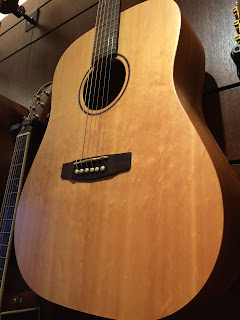
Again, another solid top selection that is well under RM1000
This one, the Earth 60 or 70 comes with more binding/rosette trims and look a very slight bit posher to some...
This one here is a special Earth Grand. Single rosette trim, no binding, all naked wood. And that top is covered in natural bearclaw figuring. This particular one is a 2nd hand, selling in Spectrum Music Penang. The price, you ask? All I can say is, too scary to post here...
Electric:
Squier Affinity Strats/Teles


 There are some pretty colours, and there are some default colours too, so it works for everyone, regardless of your taste in colours! And you're getting great quality and sound from the guitar.
Sterling SUB Series Silo3/AX3 model
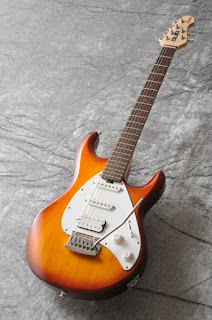
Are you noticing a pattern here? Yeah I love Strats...
The Silo3 is under RM1000. But it offers high-end features like asymmetrical neck profile and perfectly-serviceable 2-pivot bridge.

The AX3 is based on the Axis, which was Eddie Van Halen's signature guitar, before he had a fallout with EBMM and "Jump"ed-ship to Peavey, which he also had a fallout with later on...
Everything about this axe screams rock and roll. And it boasts a pretty decent price tag of around RM 1300. Features the same neck shape and bridge as the Silo3, and comes with a stunning printed quilt top.
BONUS FEATURED:
Squier Vintage Modified 51

It's neither a Strat, nor a Tele. It's got tons of quirk, no tone knob (yes, that's a 3-rotary switch there), has coil split, and guess what?
It's cheaper than the Affinity Strats/Teles.
'Nuff said.
I hope you guys enjoy this long entry. It was a rather spontaneous thing, because all the recommendation section developed from my rant about consumer mentality in the guitar industry, haha... Be sure to stay tuned for more guitar-related topics, buying guides, technical guides, reviews, shootouts, opinions and all you want to know about guitars.
Lets get to the first reason, why....
These instruments aren't high quality. Sharp, protruding fret ends threatening to slice your palm open like a baked potato, uneven frets resulting in fret buzz or dead notes on some part of the fretboard, cheap, damp and ugly wood used on shitty "beginner's" guitars resulting in very bad resonance and sustain, blotchy paint jobs or glue marks all over the place...and it goes on and on and on. So why do people still go for "beginner's" guitars while starting out, knowing that you're going to give up about 2 months later due to guitar-related-injuries or playability or maintenance woes?
As a beginner, you want to get your playing basics down, you want to learn to play the guitar right, not learn to do technical adjustments or repairs (although picking up on guitar tech abilities benefits you in the best ways, that's something you should only do later on...). A beginner needs a decent to great guitar to start off, trust me. You want to be free of maintenance worries, you want to be able to play the guitar freely without injuring yourself. With a higher quality instrument while starting out, you all have a reliable asset in your hands, you have the tone checked in your list. There is no way to go wrong with a better guitar. The sustain is at the very least, decent to great, the hardwares are better and the woods used utilises more drying process to "crystallise the resonance of the wood" (quoting Paul Reed Smith).
Sure, you get more freebies from buying packs, or you can save a few more bank notes when you buy cheap. See, most people will feel the urge to upgrade a year later, when you realise you're improving fast and might outgrow that old beater guitar. You saved a few hundred in your beginning, only to spend more in the following year, upgrading your gear. We've all done that, and some of us might still be doing that. There's really no point I feel, to save a couple hundreds here, and spend even more later on, only to realise you should have spent that money on that better guitar in the first place. And now, you've ended up with two guitars, and one of it hanging in the corner of your, until the next garage sale, which you'd probably end up selling it for like 30 bucks.
The most common reason people go cheap on their first guitars, is that they're unsure whether they're serious about taking up guitar. Take a moment, sit down by yourself and reflect on your life please...no seriously...you're here for a reason, that means you're interested in buying a guitar, learning how to play guitar and possibly, be good at guitar. If it's not about financials, I need you to toss that uncertainty out of your mind, into the trash can. Now, go and get that guitar, and play the living hell out of it. Before you know, you'd be wailing on a guitar like a rockstar or bluesman or folk fingerstylist. Just go ahead and do it, because the more you hesitate, the more you're likely to regret your decision to pick up the guitar. SO get a nicer guitar, let it inspire you to play more. Don't let a cheap crappy guitar demotivate you.
We all should look past that "cheap guitars are for beginners, expensive guitars are for experts" mentality. Who says a kid should not be allowed a PRS if his parents can afford it for him? Who says a professional gigging musician should not be allowed near a cheap beater guitar like Stagg? This mentality fails to recognise that Danelectros and Fender Mustangs and Les Paul Juniors all were once beginner's cheap beater guitars. They are't cheap anymore in the here and now though, and they certainly are not plagued with quality problems. The line should be drawn between good quality guitars and bad quality guitars, not between cheap and expensive guitars.
There are also lots of decent guitars at not-so-earth-shattering prices. Companies like Epiphone, Yamaha, Cort, Squier, Sterling By Music Man etc. they all make great quality instruments for not a lot of money. They have quality and the price is right, so what are the excuses for makers that make cheap crappy guitars that are no good at all?
These are my personal recommendations when choosing great quality guitars for beginners:
Acoustic:
Epiphone AJ-220S (or SCE for the electro-acoustic version)


Solid top acoustic-electric for a little under RM1000
Can you imagine the price on the non-electro one?
This is about 30% cheaper than the electro-acoustic one.
Need I say more?
Cort Earth Series (any model from the series)


Again, another solid top selection that is well under RM1000
This one, the Earth 60 or 70 comes with more binding/rosette trims and look a very slight bit posher to some...
This one here is a special Earth Grand. Single rosette trim, no binding, all naked wood. And that top is covered in natural bearclaw figuring. This particular one is a 2nd hand, selling in Spectrum Music Penang. The price, you ask? All I can say is, too scary to post here...
Electric:
Squier Affinity Strats/Teles


Sterling SUB Series Silo3/AX3 model

Are you noticing a pattern here? Yeah I love Strats...
The Silo3 is under RM1000. But it offers high-end features like asymmetrical neck profile and perfectly-serviceable 2-pivot bridge.

The AX3 is based on the Axis, which was Eddie Van Halen's signature guitar, before he had a fallout with EBMM and "Jump"ed-ship to Peavey, which he also had a fallout with later on...
Everything about this axe screams rock and roll. And it boasts a pretty decent price tag of around RM 1300. Features the same neck shape and bridge as the Silo3, and comes with a stunning printed quilt top.
BONUS FEATURED:
Squier Vintage Modified 51

It's neither a Strat, nor a Tele. It's got tons of quirk, no tone knob (yes, that's a 3-rotary switch there), has coil split, and guess what?
It's cheaper than the Affinity Strats/Teles.
'Nuff said.
I hope you guys enjoy this long entry. It was a rather spontaneous thing, because all the recommendation section developed from my rant about consumer mentality in the guitar industry, haha... Be sure to stay tuned for more guitar-related topics, buying guides, technical guides, reviews, shootouts, opinions and all you want to know about guitars.
Sunday, 15 November 2015
What's The Deal With Cheap Knockoffs Versus Platinum-Priced Originals?
Lots of people know they're good stuff, lots of people say they'll snag them when they see a great deal coming up. However, how many of us actually bite the bullet and hit the pay button? Not much...
It seems people are still not over the "Chinese products are shite!" propaganda. Yes, there is a difference in buying an American or Japanese-made product compared to Chinese-made products. First thing first, the price is different. We pay for different material costs, labour costs and R&D costs. Knockoffs may come off as the near-perfect clone of something that's usually expensive, but they also pay way less to R&D for starters. And from a company's point of view, that's a threat to their business. From a guitarist's point of view though, it boils down to either you pick value-for-money, or do you support the real deals.
Go to a shop, take an original Les Paul or Strat of your own choice, play it hard. Then, take the cheapest Indonesian or Chinese knockoff that you can find off the wall or rack, play it hard. Compare and let yourself be clear with what are the obvious differences that makes you feel that this guitar is cheaper. Then take a more decent, reasonably-priced knockoff, like Tanglewood or Cort, play it hard. Come on, really. Be honest with yourself and answer this, are the differences really worth that few thousand coins?
The thing with musical instruments is that, if you start off looking at very very low-priced instruments, lets say you can push your budget just a tiny bit more, the quality is worlds apart. But once you get into the higher range or high-end instruments, the differences are only so small, sometimes even negligible. In simple words, the improvement that you experience going from a 50 quid guitar to a 200 quid one is huge. Going from a 400 quid one to a 1000 quid one, the improvement is still reasonably large. How bout a 1000 quid one and 2000 quid one? You are already paying for a very high quality piece at 1000 quid. To further improve on that quality point is possible, no matter how much more you pay, lets face it you won't go far from the 1000 quid piece.
The rare and highly-revered Klon Centaur, which is based on a Tube Screamer and claimed to be an improvement, fetches upwards of £500 for the silver one (quoting Total Guitar). A TS808 Tube Screamer today is priced at almost 1/10 that price. Electro Harmonix created the even cheaper Soul Food pedal as their Klon clone (note how when it's made by a famous company, it's labelled a knockoff anymore?). Joyo, Biyang, Mooer and the likes make Tube Screamer copies, at half the price of the EHX. Are you feeling your GAS yet? Or even better, are you feeling your wallet's sigh of relief and surge of panic at the same time?
You can get down to the details, like how boutique pedals have that little bit more transparency or voodoo, or how a Gibson has that little bit more cojones than an Epiphone Tribute (the ones with Gibson pickups) But you can never argue with economy. It wouldn't make much sense to pay one or two extra grand for that 5% improvement that may or may not matter to you at all. Unless you think brand is important, or supporting an original brand, or that you just want to play it safe and hopefully by buying originals, you can avoid getting substandard products. The choice is yours, whether the price difference is justified or not.
It is however, unfair in my opinion, for companies to charge customers a premium on some old techs that hasn't been improved or required much R&D since half a century ago. I mean, take a look at fuzz pedals. The new Fuzz Face Minis, are basically Fuzz Faces shrunk to a proper pedalboard-friendly size. I have attempted to build this pedal, and I was successful in doing it. In the process, I have learnt that the material cost was not even close to half of the selling price, it's also a pretty easy job with very less components. So why are they selling for half a thousand ringgit or even more here in Malaysia? I mean, dude, Jim, those pedals are way older than me. They've been around since the 60's. And today, they still make that same basic sound. I get it, Jimi's FF has some different component values and germanium transistors, all that stuff, but how much R&D cost did you guy really need to re-make for the N-th time, a pedal that has been around before my parents were even born? Really? There's the schematic in your lab that's 50 years old, and you're still using that same old schematic because it's pretty damn good. I have nothing but respect for that pedal and the company, but come on, you're way past that breakeven point, it's time to cut your price now.
This post is turning out to be a long rant... Anyway, any Malaysians interested in buying cheap handwired Fuzz Face/Big Muff type fuzzes, I do make them. Just drop a comment here and I'll respond as soon as I see your comments.
For those of you out there who took an interest in reading my blog, I thank you from the bottom of my heart. Your interest means more than anything I can ever afford for myself. I've just started this blog as a platform for discussing guitar-topics from my own POV, and in the near future I'll start doing some reviews or shootouts for products that I have come across or owned, and maybe share some of my personal guitar-related projects as well. I'll try my best to update this blog at least once or twice a week, depending on my daily routine. Once again, thank you for dropping by, and have a nice day! (or midnight, in my case...)
It seems people are still not over the "Chinese products are shite!" propaganda. Yes, there is a difference in buying an American or Japanese-made product compared to Chinese-made products. First thing first, the price is different. We pay for different material costs, labour costs and R&D costs. Knockoffs may come off as the near-perfect clone of something that's usually expensive, but they also pay way less to R&D for starters. And from a company's point of view, that's a threat to their business. From a guitarist's point of view though, it boils down to either you pick value-for-money, or do you support the real deals.
Go to a shop, take an original Les Paul or Strat of your own choice, play it hard. Then, take the cheapest Indonesian or Chinese knockoff that you can find off the wall or rack, play it hard. Compare and let yourself be clear with what are the obvious differences that makes you feel that this guitar is cheaper. Then take a more decent, reasonably-priced knockoff, like Tanglewood or Cort, play it hard. Come on, really. Be honest with yourself and answer this, are the differences really worth that few thousand coins?
The thing with musical instruments is that, if you start off looking at very very low-priced instruments, lets say you can push your budget just a tiny bit more, the quality is worlds apart. But once you get into the higher range or high-end instruments, the differences are only so small, sometimes even negligible. In simple words, the improvement that you experience going from a 50 quid guitar to a 200 quid one is huge. Going from a 400 quid one to a 1000 quid one, the improvement is still reasonably large. How bout a 1000 quid one and 2000 quid one? You are already paying for a very high quality piece at 1000 quid. To further improve on that quality point is possible, no matter how much more you pay, lets face it you won't go far from the 1000 quid piece.
The rare and highly-revered Klon Centaur, which is based on a Tube Screamer and claimed to be an improvement, fetches upwards of £500 for the silver one (quoting Total Guitar). A TS808 Tube Screamer today is priced at almost 1/10 that price. Electro Harmonix created the even cheaper Soul Food pedal as their Klon clone (note how when it's made by a famous company, it's labelled a knockoff anymore?). Joyo, Biyang, Mooer and the likes make Tube Screamer copies, at half the price of the EHX. Are you feeling your GAS yet? Or even better, are you feeling your wallet's sigh of relief and surge of panic at the same time?
You can get down to the details, like how boutique pedals have that little bit more transparency or voodoo, or how a Gibson has that little bit more cojones than an Epiphone Tribute (the ones with Gibson pickups) But you can never argue with economy. It wouldn't make much sense to pay one or two extra grand for that 5% improvement that may or may not matter to you at all. Unless you think brand is important, or supporting an original brand, or that you just want to play it safe and hopefully by buying originals, you can avoid getting substandard products. The choice is yours, whether the price difference is justified or not.
It is however, unfair in my opinion, for companies to charge customers a premium on some old techs that hasn't been improved or required much R&D since half a century ago. I mean, take a look at fuzz pedals. The new Fuzz Face Minis, are basically Fuzz Faces shrunk to a proper pedalboard-friendly size. I have attempted to build this pedal, and I was successful in doing it. In the process, I have learnt that the material cost was not even close to half of the selling price, it's also a pretty easy job with very less components. So why are they selling for half a thousand ringgit or even more here in Malaysia? I mean, dude, Jim, those pedals are way older than me. They've been around since the 60's. And today, they still make that same basic sound. I get it, Jimi's FF has some different component values and germanium transistors, all that stuff, but how much R&D cost did you guy really need to re-make for the N-th time, a pedal that has been around before my parents were even born? Really? There's the schematic in your lab that's 50 years old, and you're still using that same old schematic because it's pretty damn good. I have nothing but respect for that pedal and the company, but come on, you're way past that breakeven point, it's time to cut your price now.
This post is turning out to be a long rant... Anyway, any Malaysians interested in buying cheap handwired Fuzz Face/Big Muff type fuzzes, I do make them. Just drop a comment here and I'll respond as soon as I see your comments.
For those of you out there who took an interest in reading my blog, I thank you from the bottom of my heart. Your interest means more than anything I can ever afford for myself. I've just started this blog as a platform for discussing guitar-topics from my own POV, and in the near future I'll start doing some reviews or shootouts for products that I have come across or owned, and maybe share some of my personal guitar-related projects as well. I'll try my best to update this blog at least once or twice a week, depending on my daily routine. Once again, thank you for dropping by, and have a nice day! (or midnight, in my case...)
Saturday, 14 November 2015
Growing Up As A Guitar Freak In The 21st Century
Ever sat down and wonder about how hard it is growing up in the 21st century? Inflation, global warming, more ailments and illnesses arising, even academics are getting harder and harder on the students. Hell, things are getting more and more complicated the higher the year ticker goes.
The same is true for the guitar industry. Informations are getting so readily available, that everyone is a genius when a smartphone is present in their pockets. Instead of the traditional way of gaining knowledge from books and magazines, we're getting all sorts of information, be it truth or rumours, from the same damned phone. And why is it hard growing up in the guitar industry of the 21st century? Enter the guitar freaks, who passionately and tirelessly do their deep researches late into the nights, only to find that they might be wasting their life on some insignificant details, but still carries on doing it nevertheless.
I am a guitar freak myself because of 3 things.
1. I don't play as much (or as well...I guess) as I do my guitar researches. Mahogany vs Alder? I can do this all day long. Graphite nut vs bone nut? It depends on which sound you're going. Play through Purple Haze and try to learn that solo section? Wait, I wonder what made Jimi's fuzz sound so special...
2. I love guitar gear. I love 'em to bit. I love looking at guitars, reading about guitars, explaining or talking about guitars, trying guitars, buying guitars, modifying guitars, selling guitars (I'm working in a music shop currently), then I'll move on to amps, pedals, etc. I love listening to music too, and also playing music. But as a guitar freak, apparently the "right" tone matters more, because I can't be inspired to play music if I ain't got that tone right...so I'm off to tone-chasing. Again.
3. It's late at night, and I'm still passionately and tirelessly blogging about guitars. Need I say more?
Being a guitar freak isn't that bad actually, apart from it messing up your body clock, maybe causing a couple hole in the wallets, or losing a girlfriend because you were trying a Custom Shop Les Paul and forgot to turn up at your movie date (no, this did not happen...it's just a joke). What's great about being a guitar freak is my knowledge and passion about guitars. It helped me land my job as a music shop sales assistant. It made my life a lot easier at the job because all I needed to learn was the SOP of working in the shop, and since our shop is more guitar-oriented, I've already been self-trained before I got the job, so it also made my superiors' life easier. It makes me connect to musicians, even though I am not as musically-talented as I wanted to be. It's a pretty good time-killer as well...
Here's what's fun about living in the 21st century. Info, info everywhere. There are abundant sources to learn your ropes from, whether you want to take up guitar playing, learn to build a guitar, guide to buying your first pedal, or even just looking for what kind of music to download. And everything is easily accessible with your smartphone. I have to confess, I spend more time on my phone these days than on my guitars, reading about guitars. You don't have to wait for TV programmes about guitars to air (that would be never, in my country), you can hit it up on Youtube, watch Rob and Capt demo some rad gear. Or you could be on retail websites looking for the best deals. Or on some blogs reading about the process of flipping your pickup magnet to get that Peter Green sound. Or even Harmony Central reading about how leaving that backplate off your Strat can improve it's sound (I do that too, but not for tonal purposes...).
In time with the best technology that the world can ever have at the moment, you wanted nothing modern. You still wear that faded blue jeans from your 12th birthday and you still rocked Converse Chucks. You have the best digital modelling unit in the world for the cleanest and closest-to-the-real-deal sound ever, but you chose to sell it in favour of a very outdated, inefficient, high-maintainence, ridiculously heavyweighted and overly-loud tube amp. There are many great new and arguably similar overdrive pedals in the world, but that Klon Centaur, which is "just" a boutique variation of a Tube Screamer, still reigned supreme in your books and you want one, even though you've never tried one, and never will be able to own one, let alone justify the price to own one. You want "The Tone", and you want nothing else. Not even Vintage Noiseless pickups.
Tons of things you can do to convert yourself and devote your life to be a true guitar freak. Turning yourself in almost feels like having a new purpose for life. You're not wandering anymore, you know you want that blonde Tele. You want the deep, straight-grained rosewood fretboard, you want no neck-pickup on it, you want a Seymour Duncan Broadcaster bridge pickup in there. Oh and you have 3 words for the strings. Pure Nickel Only.
That's it for my first post here. I know some parts of it might sound like I'm joking, indeed I am. But anyway, if any of you ever complete reading this whole post, I want to thank you for visiting my blog and taking an interest in reading my post. New post coming soon, so stay tuned! (if you're still interested...)
Subscribe to:
Posts (Atom)